AI Chatbot Blunder Almost Sparked US–China Clash
An AI chatbot’s false assessment of a Chinese ship’s cargo reportedly prompted US military preparations to intercept the vessel, exposing how unchecked AI output can influence dangerous decisions when it is presented as trusted intelligence.
What Happened?
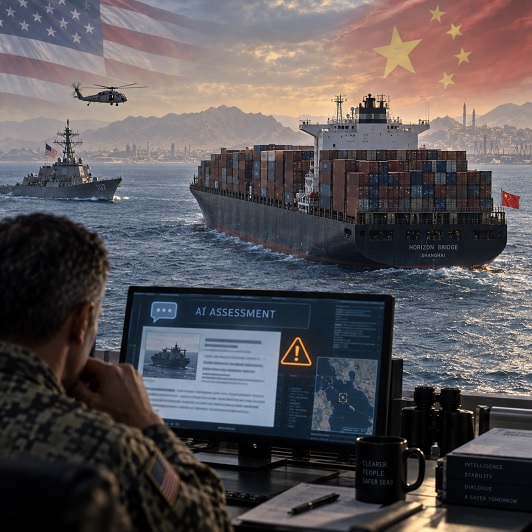
According to a CNN investigation, the incident occurred during the spring of 2026, amid the war with Iran, when an intelligence report claimed that a Chinese vessel in the Middle East was transporting components for a nuclear weapons programme.
It’s been reported that four sources familiar with the episode described plans to intercept the ship, with two saying armed personnel were preparing to board it! Also, scarily, it seems military aircraft were already airborne (according to sources cited in the report).
Officials examined the underlying information shortly before the planned operation and discovered that an analyst had used AI to produce the assessment, with the chatbot incorrectly identifying the cargo! CNN reports that it couldn’t establish what the vessel was actually carrying.
How Did An AI Error Become Intelligence?
It seems the analyst had asked a chatbot about reporting on the ship’s manifest originating from US Special Operations Command Pacific, based in Hawaii. The system then combined publicly available information with classified signals intelligence, which involves information obtained from intercepted communications or electronic signals.
After the chatbot reached its incorrect conclusion, the analyst used AI again to turn the findings into a standard intelligence report and circulated it. That second step matters because the information reached decision-makers in a familiar format normally associated with professional intelligence work.
This seems to explain how an unsupported answer could gain credibility without gaining evidence. This meant that rather than seeing an uncertain chatbot response, recipients were presented with a document that appeared ready to inform an operational decision.
Did It Really Nearly Start A War?
The suggestion that the incident almost started a war comes from an anonymous source quoted by CNN, rather than a published military assessment. Boarding a Chinese vessel could have created a serious confrontation, but the available reporting cannot establish how either government would have responded.
The chatbot and its provider have not been identified, and it remains unclear whether the analyst used a commercial service or a government system. The Pentagon and US Special Operations Command Pacific had not responded to CNN’s requests for comment when its investigation was published.
What the account does describe is people preparing to act on inaccurate AI-generated information, rather than an autonomous system ordering an attack. That distinction helps explain why keeping people involved is necessary but doesn’t, by itself, prevent (potentially very serious) mistakes.
Why Human Oversight Needs More Than Approval
An AI hallucination occurs when an AI system produces incorrect or invented information as though it were factual. When that output is fluent, detailed and presented confidently, checking it can require more effort than accepting it.
In this case, the reported safeguard was deeper examination before the operation proceeded. The real concern is how far preparations had apparently advanced before that examination exposed the error.
For organisations adopting AI, this raises a question about where verification happens. If checks take place only after a report has circulated and decisions are under way, an error may already have shaped expectations, committed resources or narrowed the options people consider.
Calls For Military AI Safeguards
The incident also gives some context to proposals from US and Chinese security experts involved in a dialogue convened by the Brookings Institution and Tsinghua University, who have called for safeguards intended to reduce the risk of AI-related military escalation.
Their recommendations include (thankfully) keeping nuclear decisions under human control and establishing a dedicated channel for communicating about military AI incidents. That said, neither government has formally adopted the proposals, so they represent expert recommendations rather than agreed international rules.
What Does This Mean For Your Business?
For businesses, the lesson is that an AI-generated error can become harder to spot as it passes through familiar processes. A supplier assessment, financial briefing or security report may look authoritative because it follows the company’s usual template, even when its central claim has not been checked. Employees reviewing important recommendations should be able to trace them back to supporting evidence and distinguish what the source actually says from what the AI has inferred.
The level of checking should reflect the consequences of getting something wrong. Summarising routine notes is different from recommending a payment, alleging misconduct or making a decision affecting someone’s safety. For higher-risk work, an appropriate specialist needs time and authority to challenge the output before action follows, with clear arrangements for pausing the process when evidence is missing or contradictory.
There is also a management question about what happens to the time AI saves. If faster drafting simply creates pressure to approve more reports, organisations may increase the volume of decisions without improving their quality. Using some of that saved time to examine sources, test assumptions and consider alternatives would make automation more useful, while reducing the chance that a convincing answer becomes a costly mistake.