
YouTube Doubles Monetisation Threshold For Creators
YouTube is doubling the amount of viewing new creators need before they can earn advertising and subscription revenue, making it considerably harder to monetise a new channel as the platform looks to reward creators capable of building and maintaining substantial audiences.
What Is Changing?
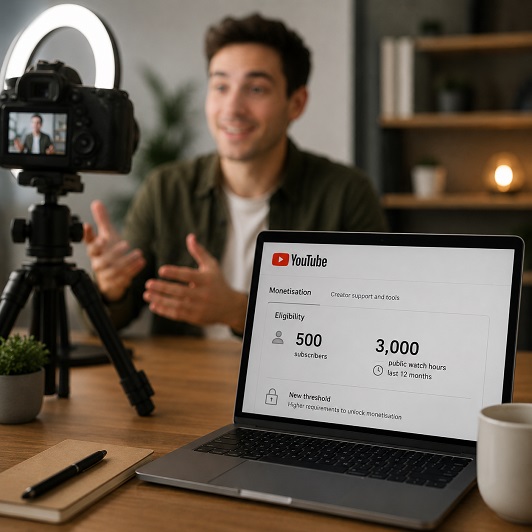
From 1 February 2027, new creators applying to the YouTube Partner Program (YPP) for advertising and Premium revenue sharing will need 8,000 qualified watch hours during the previous 365 days or 20 million qualified Shorts views within 90 days.
That represents a significant increase from the current requirements of 4,000 watch hours or 10 million Shorts views, effectively doubling the amount of viewing needed before a new creator can qualify for this part of YouTube’s monetisation programme.
Importantly, the new thresholds will not apply retrospectively to the more than three million creators already participating in YPP. YouTube is also leaving its existing entry requirements for Fan Funding and Shopping products unchanged, meaning newer channels may still have opportunities to earn money before becoming eligible for advertising and Premium revenue sharing.
Why Is YouTube Raising The Bar?
YouTube says the changes are necessary partly because of the extraordinary growth of the platform since it last made significant changes to YPP in 2018.
The company says YouTube now generates “over 200 billion daily Shorts views and over a billion hours of watch time on TV every day”, creating a vastly larger creator economy than existed when its current thresholds were introduced.
YouTube says the changes are intended to ensure YPP continues “meaningfully rewarding active creators”, while allowing it to invest in other ways for creators to earn money.
For someone attempting to build a new YouTube business, however, reaching the point where a channel can generate advertising revenue will require substantially more viewing, potentially extending the period during which creators need to produce content without receiving any advertising income directly from YouTube.
Shorts Creators Face Another Change
YouTube is also introducing a separate requirement affecting creators who make money from Shorts, its short-form vertical videos designed for quick viewing.
From February, creators will need 10 million qualified Shorts views during the previous 90 days to receive advertising and subscription revenue from Shorts. Falling below that figure will not remove a channel from YPP, and creators can continue earning money from eligible long-form videos, although Shorts revenue sharing will stop until the channel passes the 10-million-view threshold again.
YouTube says creators already generating substantial revenue from Shorts are unlikely to be affected, although the change clearly places greater emphasis on maintaining consistently high viewing figures rather than simply achieving them once.
For smaller Shorts creators, YouTube is promising alternative opportunities, including bonuses linked to YouTube Shopping, incentives for brand deals and potential earnings boosts for starting and growing trends, with further details expected later.
Premium Lite Expands
While YouTube is making entry to its main revenue-sharing programme harder, it is also expanding another source of income for established creators through Premium Lite.
The lower-cost subscription is being expanded to every country where YouTube Premium is available, giving subscribers uninterrupted, offline and background viewing of most content.
Creators receive a proportion of the subscription revenue based on member watch time and views, with eligible long-form creators receiving a 55 per cent revenue share from their distribution and Shorts creators receiving 45 per cent.
YouTube believes subscription viewers can be particularly valuable to creators, saying: “When a user signs up for Premium, partners, on average, earn more than when the user was watching ads.”
That makes Premium increasingly important to YouTube’s wider creator economy because income does not have to depend entirely on how many advertisements appear around a creator’s content.
A Different Creator Economy
Taken together, the changes suggest YouTube is increasingly encouraging creators to think beyond conventional advertising revenue.
For years, joining YPP and switching on advertising has represented an important milestone for aspiring YouTubers. Doubling the viewing requirements makes that milestone significantly harder to reach, while YouTube simultaneously expands subscriptions, Shopping, brand partnerships and other incentive programmes.
The company says it expects to pay creators more in 2027 than it did in 2026, so the announcement is not necessarily about reducing the overall amount distributed to creators. Instead, it appears to be changing which creators qualify for particular types of revenue and how that money is earned.
For established creators with substantial audiences, the changes may therefore create more earning opportunities. For someone starting a channel from scratch, however, building sufficient scale before receiving advertising revenue is about to become considerably more challenging.
What Does This Mean For Your Business?
For businesses using YouTube, the changes are a useful reminder that the commercial value of a channel should not necessarily be measured by the advertising revenue it generates. A specialist business channel with several thousand highly relevant viewers could produce enquiries, demonstrate expertise, support existing customers and influence purchasing decisions long before it reaches 8,000 annual watch hours.
However, it now seems that businesses hoping to build YouTube itself into a direct revenue stream will need to plan for a longer journey towards monetisation, particularly if they are starting after the new requirements take effect. Consistent publishing, retaining viewers and creating content people genuinely want to watch will become even more important when twice as many viewing hours are required.
YouTube’s changes also illustrate how mature the creator economy has become. Simply attracting enough viewers to qualify for advertising is becoming a higher hurdle, while subscriptions, sponsorships, shopping and direct commercial opportunities are becoming more important. For businesses, that reinforces the value of treating YouTube primarily as a way to build an audience and generate wider commercial opportunities, with platform advertising revenue potentially becoming a useful benefit rather than the main objective.