Samsung Warns Of Memory Shortage Until 2028
Samsung has warned that the global shortage of computer memory is set to continue for at least another two years, signalling that the artificial intelligence boom is reshaping the technology industry in ways that could keep hardware prices higher and supply tighter well into 2028.
What Has Samsung Said?
The warning came as Samsung announced another set of exceptionally strong financial results, driven largely by soaring demand for memory chips used in AI infrastructure.
Speaking during the company’s second-quarter earnings call, Jaejune Kim, Executive Vice President of Samsung’s Memory Business, said the industry faces a prolonged period of constrained supply.
He told analysts: “We believe it will be unlikely to see any significant increase in incremental supply through 2028.”
Samsung also believes the situation is likely to become even more challenging before it improves.
As Kim explained: “Based on the incoming requests that we have been seeing from the customers, unmet demand from this year is likely to carry over into the following year, contributing to tighter supply conditions going forward. The supply constraints are expected to become even more severe in 2027 than 2026, reinforcing our view that the supply shortage will persist through 2028.”
For businesses already facing rising hardware costs and longer delivery times, those comments suggest the current market is unlikely to return to normal any time soon.
Why Is Memory In Such Short Supply?
The answer lies largely with AI. Training today’s frontier AI models already requires enormous quantities of high-performance memory. However, the rapid growth of AI agents capable of carrying out increasingly complex tasks is placing even greater pressure on memory demand because those systems must process, retain and reuse vast amounts of information.
Samsung described this as an “unprecedented rise” in demand for AI servers and computing infrastructure.
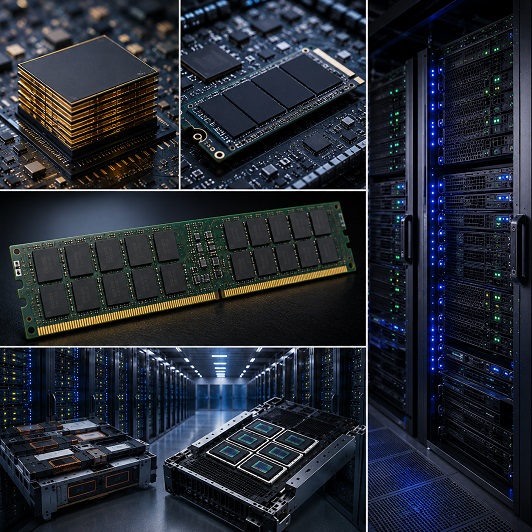
At the same time, memory manufacturers are prioritising the production of specialist products such as High Bandwidth Memory (HBM), enterprise solid-state drives and advanced server memory, where demand and profit margins are highest.
That inevitably leaves less manufacturing capacity available for the mainstream memory chips used in laptops, desktop PCs, smartphones, networking equipment and countless other everyday devices.
Why Can’t Manufacturers Simply Make More?
Although demand has risen rapidly, increasing production is far from straightforward.
For example, modern semiconductor fabrication plants are among the most complex manufacturing facilities ever built. Constructing them, installing the specialist equipment, testing production lines and achieving commercially viable yields typically takes well over three years.
Samsung says that timeline is one of the main reasons additional supply cannot arrive quickly enough to ease the shortage.
Even though manufacturers are investing heavily in new facilities, today’s decisions will not produce meaningful increases in output for several years.
Independent market analysts seem to broadly agree. For example, TrendForce expects AI to remain the dominant driver of memory demand throughout 2027, with substantial increases in mainstream DRAM production unlikely to materialise until 2028.
Who Benefits And Who Pays?
The shortage seems to be creating some clear winners and losers. Memory manufacturers such as Samsung are benefiting from strong demand, higher prices and customers willing to commit to multi-year purchasing agreements to guarantee future supply.
Samsung says: “Customers who want to secure substantial AI service infrastructure are increasingly approaching us for multiyear supply.”
Those long-term agreements help manufacturers reduce the boom-and-bust cycles that have traditionally characterised the memory industry while giving major cloud providers greater certainty over future capacity.
The position is rather different for smaller businesses and many enterprise buyers.
Without the purchasing power of hyperscale cloud operators, organisations may increasingly find themselves competing for the remaining supply of mainstream memory components. That pressure ultimately feeds through into higher prices for servers, laptops, smartphones, storage systems and other business technology.
The effects are already spreading beyond cutting-edge AI hardware. Market analysts report that shortages are beginning to influence older generations of memory as manufacturers and hardware vendors look for alternative components when newer products become difficult or expensive to source.
The Memory Crunch Is Part Of A Bigger Picture
Perhaps the most interesting aspect of Samsung’s warning is that memory is not the only technology facing long-term supply pressure.
Storage manufacturers are also reporting exceptionally strong demand as AI systems generate and retain ever-growing volumes of information. Seagate, for example, says that most of its nearline hard drive production is already allocated through 2028 as cloud providers reserve capacity years in advance.
Taken together, these developments suggest that AI is reshaping the entire technology supply chain rather than affecting only specialist processors or graphics chips.
Memory, storage, networking equipment and data centre infrastructure are all experiencing sustained demand as organisations continue investing heavily in AI capabilities.
What Does This Mean For Your Business?
For businesses, Samsung’s warning suggests that technology purchasing may require more forward planning than it has for many years.
Organisations expecting to refresh laptops, servers, storage or other infrastructure should not assume that component prices or lead times will quickly return to previous levels. Longer procurement cycles, earlier budgeting and closer relationships with suppliers may become increasingly important while supply remains constrained.
The shortage also highlights how profoundly AI is changing the economics of the technology industry. Infrastructure that once served conventional business applications is increasingly competing with AI platforms for the same underlying components, influencing prices across the entire market rather than only within specialist AI systems.
Businesses should therefore view this not simply as a temporary shortage but as evidence of a broader structural change. As AI investment continues to accelerate, organisations that plan technology purchases well in advance, extend the life of existing equipment where appropriate, and build greater flexibility into their IT strategies are likely to be better placed to manage higher costs and ongoing supply constraints over the next several years.