When Employees Object To Using AI
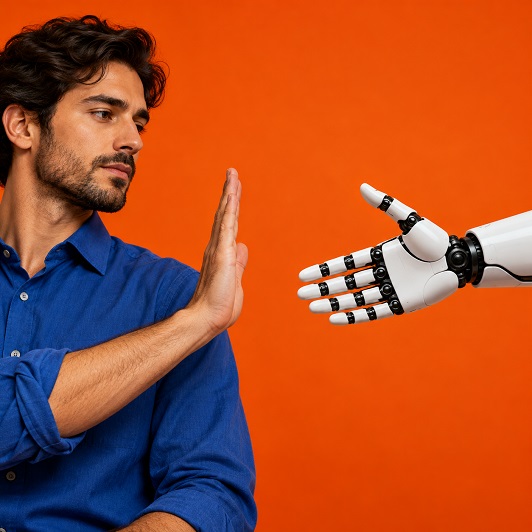
A University of Kentucky employee has secured permission to avoid personally using AI because of his humanist beliefs, raising questions about how employers should introduce the technology when staff have objections rooted in conscience.
What Happened In Kentucky?
David Durman, a research administrator who helps prepare and submit grant applications, became concerned when his department began encouraging staff to try AI tools. Although their use wasn’t compulsory, he wanted to establish that he could continue working without them if that changed. With help from the American Humanist Association, he requested an exemption under US religious accommodation law in August. The university approved his request on 25 September.
According to the association, the university agreed that he could carry out all his duties without personally using AI and without causing difficulties for his department. The arrangement allows him to continue doing his job in a way that respects his beliefs.
Why Did He Object?
Durman’s objection concerns what he believes people lose when they hand thinking and judgement to software. Humanism (Durman’s belief) is a non-theistic worldview that emphasises reason, human dignity and responsibility for others, and he considers exercising those responsibilities himself essential to living by his beliefs.
He explained in his application why he objects to using AI for tasks such as transcribing meetings, taking notes and helping with decisions. For Durman, listening to colleagues and thinking things through himself are part of taking responsibility for his work, even if tools such as ChatGPT, Claude or Gemini could save time.
He also offered to take and share his own meeting notes so that colleagues would still have the information they needed. As he wrote in his request, “I am glad to manually take and share my own meeting notes to ensure no operational burden on the department.”
It should be noted here that his objections reflect Durman’s own understanding of his beliefs, rather than a requirement for all humanists to avoid AI. In fact, the American Humanist Association says humanists hold different views about the technology and supports their freedom to decide how to act on those beliefs.
How Can A Non-Religious Belief Qualify?
Durman’s request was considered under Title VII of the US Civil Rights Act, which can protect deeply held beliefs even when they do not involve a god or belong to a traditional religion. The Equal Employment Opportunity Commission explains that certain sincerely held ethical and moral beliefs can qualify for the same protection.
Where those beliefs conflict with a work requirement, employers must make reasonable changes unless doing so would place a substantial burden on the business. In practice, that means considering what the employee is asking for and how it would affect their duties, colleagues and the organisation.
Simply disliking AI wouldn’t, by itself, give someone the right to refuse it. The request must be based on a qualifying belief rather than a personal preference, and the employer must consider whether a workable arrangement is possible.
Is This A First?
The American Humanist Association believes this is the first such accommodation granted to a humanist, although another employee had already obtained an exemption on religious grounds. Durman was inspired by Erin Maus, a Unitarian Universalist software engineer whose accommodation was reported earlier this year.
The Kentucky decision was made by the employer, rather than imposed through a court judgment. It therefore provides an example of a workable agreement without establishing that every similar request must succeed.
Could This Happen In Britain?
In Great Britain, the Equality Act 2010 protects religion and qualifying philosophical beliefs, but the American accommodation rules do not apply. Also, Acas says that a protected philosophical belief must be genuinely held, serious and coherent, concern a significant aspect of human life and respect other people’s fundamental rights.
An objection to AI would therefore need to be considered on its own merits. Acas actually advises employers assessing requests to avoid certain duties to consider whether those duties are central to the job, whether colleagues could cover them and whether changes would create problems for the business or customers.
What Does This Mean For Your Business?
For businesses introducing AI, the case is a reminder to explain why particular tools are needed and give staff a clear way to raise concerns. Managers should distinguish between someone needing training, someone questioning a tool’s reliability and someone describing a conflict with deeply held beliefs.
Where an objection arises, discuss the specific task and whether another method could achieve the required standard without unfairly increasing colleagues’ workloads. Record any agreed arrangements and seek appropriate employment advice before rejecting a request or taking disciplinary action.
Durman’s case shows that adopting AI need not mean requiring everyone to use it in exactly the same way. Employers still need dependable results, but allowing a workable alternative may protect both those results and employees’ freedom of conscience.